Harakeke Gold — A circular approach to colour
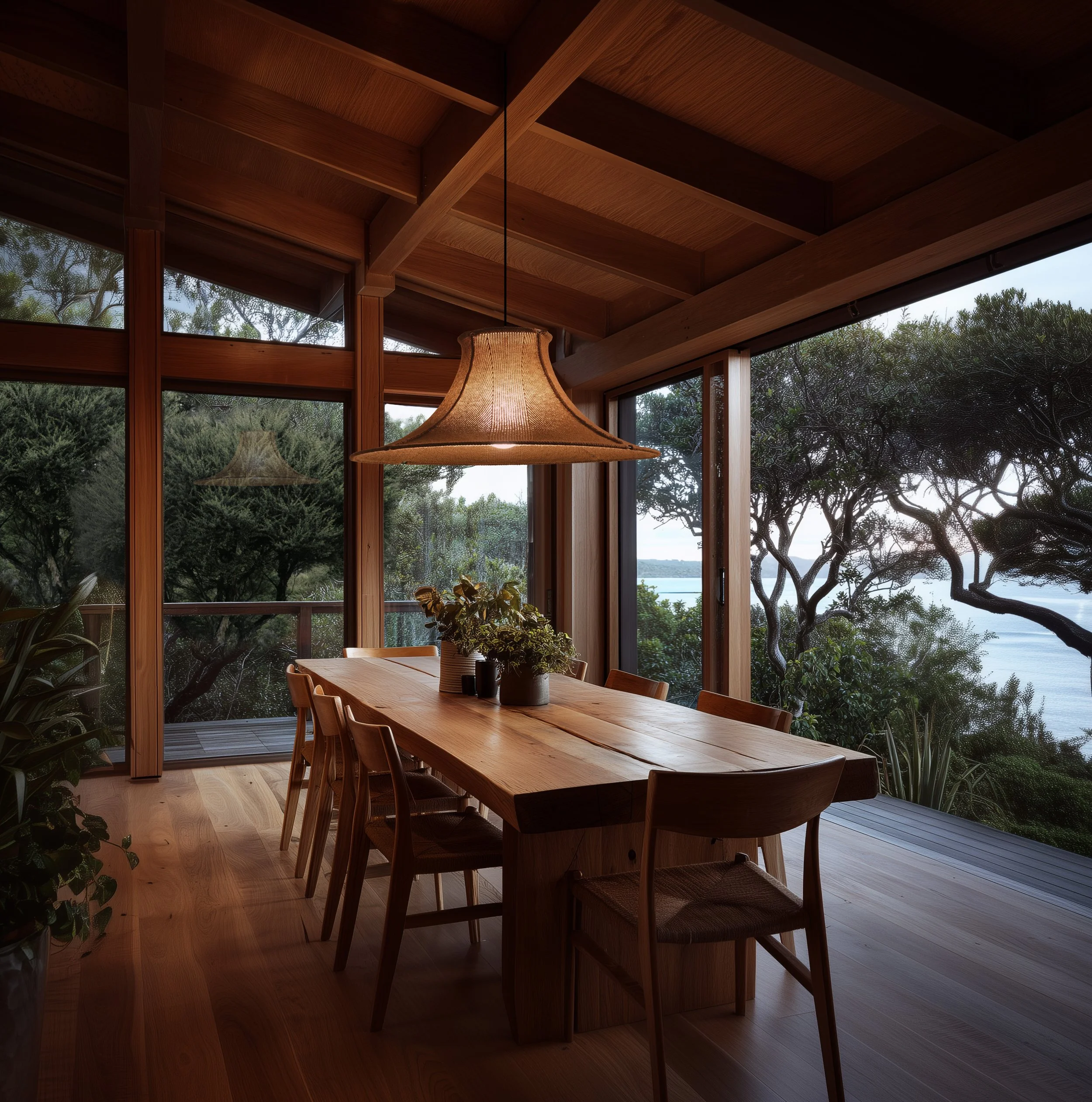
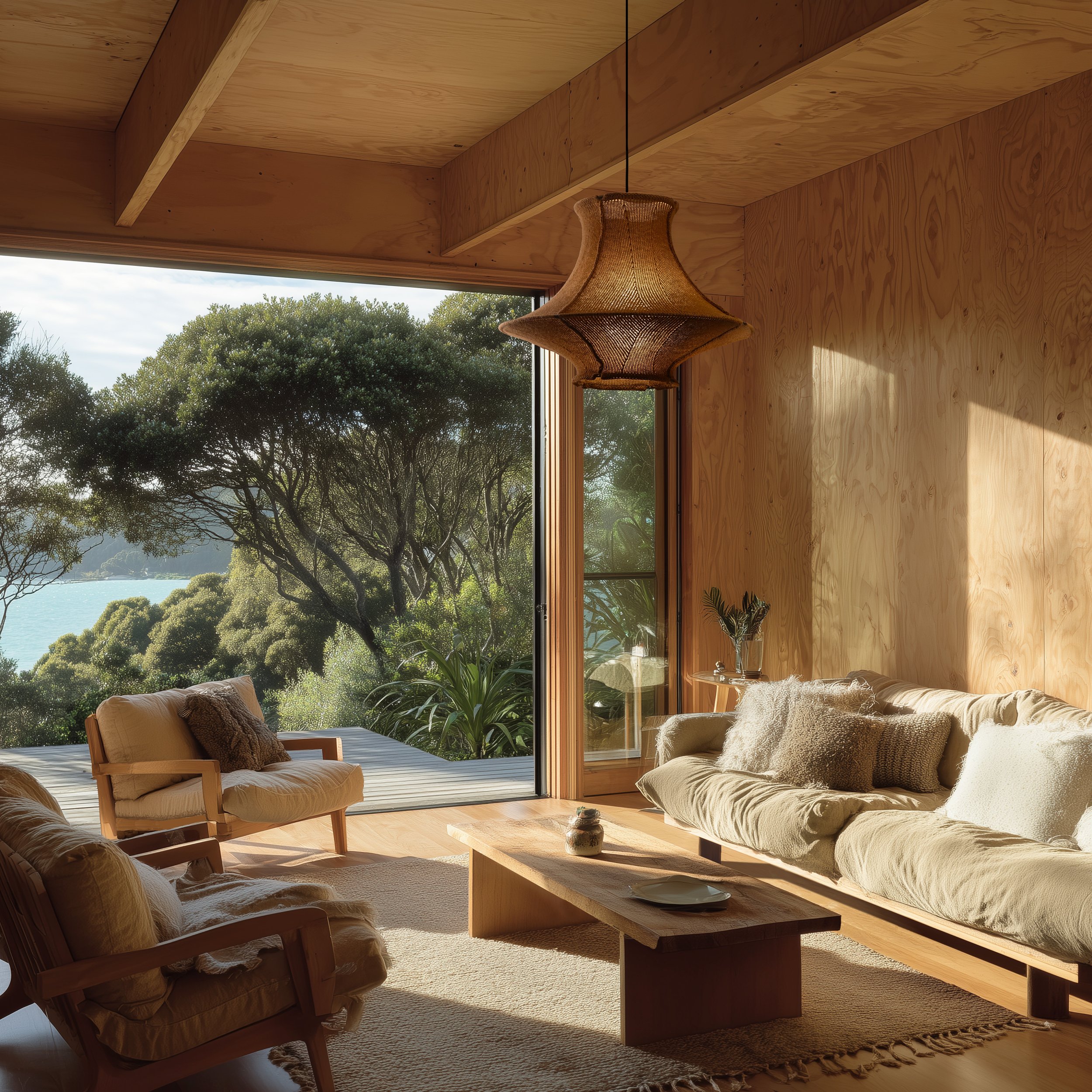
The Bloem 80 in Harakeke Gold.
How can we love colour and use it to enrich our lives, while still designing for environmental responsibility?
Conventional textile dyeing is one of the most polluting parts of the textile industry. It relies heavily on synthetic chemicals and can compromise end-of-life biodegradability, even when the fibre itself is natural. For a wool product designed around circularity, this didn't sit right with us. As we considered bringing colour into our range, we had to ask whether colour could be added without undoing the circular logic of the product. Would we remain a natural-white brand forever, or could colour be approached in a different way? Colour is now everywhere. It is cheap, instant, and endlessly available through mass manufacturing. In that abundance, it can start to feel meaningless, oversaturated, and without soul. Have we reached peak colour? Do we actually need more of it in the world? Perhaps yes, if colour is understood differently. People still want warmth, mood, expression, and atmosphere in their homes. Colour helps us feel something and can shift the mood of a space. But what if the question was not simply what colour, but where that colour comes from? Maybe the outcome would be different.
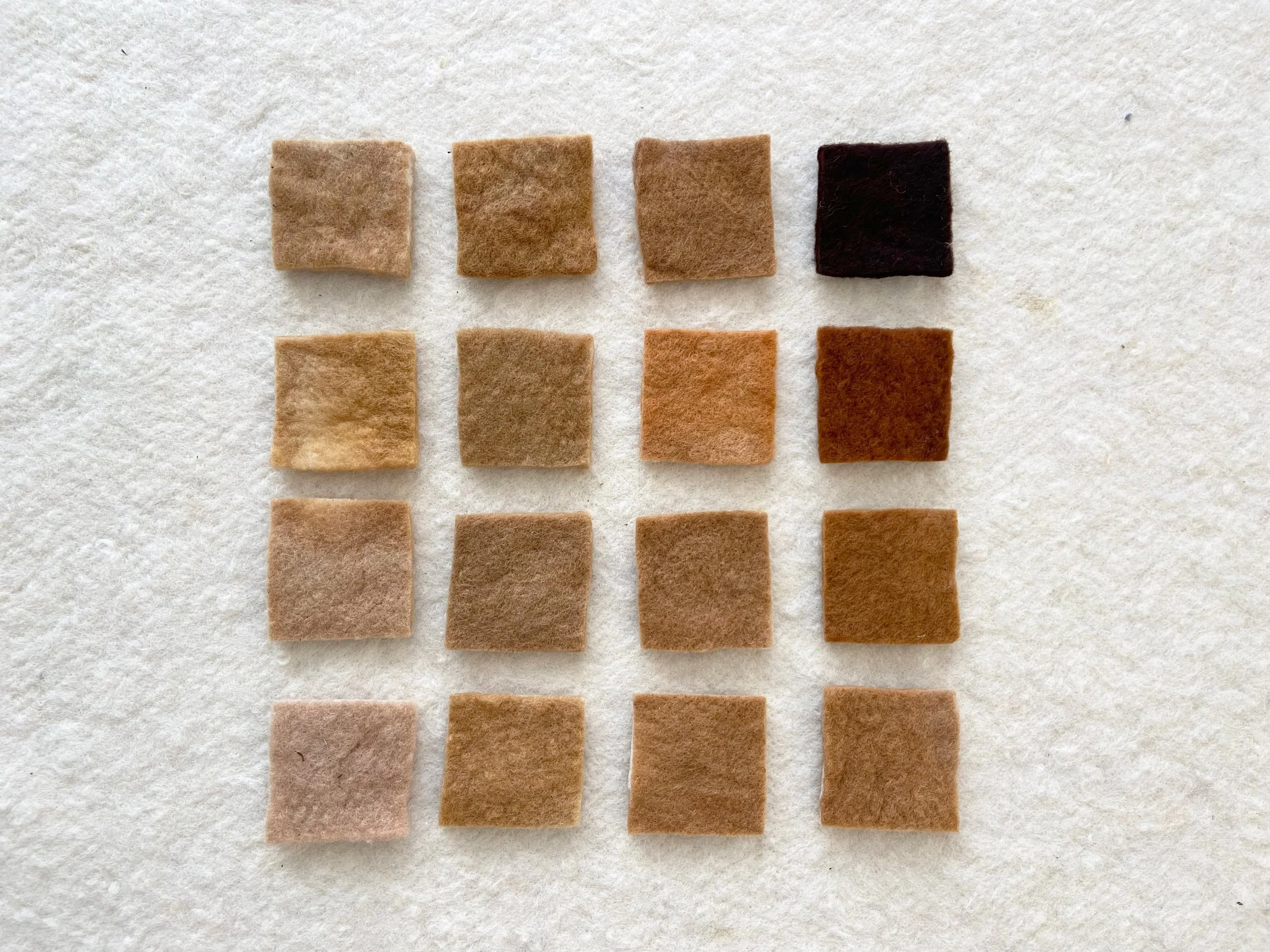
Experiments in colour.
This project began with the idea of creating colour in a way that felt connected to Aotearoa, and our landscapes. Over the past five years, we have researched and developed a small-scale but repeatable plant dye process using locally foraged and responsibly sourced plants, including harakeke. Harakeke is a plant of deep cultural significance in Aotearoa and an important material in Māori weaving traditions. With this in mind, we gathered material carefully and seasonally, often after native birds such as tūī have finished feeding, allowing the ecosystem to regenerate naturally. The project considers colour as part of a circular material system: using locally available plant material to dye an abundant, locally grown fibre. Unlike conventionally dyed textiles, the resulting wool is designed to remain biodegradable and return to the earth at the end of its useful life. Rather than choosing from a synthetic colour chart, we began by looking to the immediate landscape: native plants and seasonal organic materials growing locally that could offer colour without compromising the circular nature of our natural wool products. The strategy was to develop a palette that was beautiful, but also local, compostable and repeatable at a small production scale. Colour had to do more than make the product more desirable. It had to support the wider design intent: low-impact materials, a safe return to the soil, and a stronger connection between interior spaces and the whenua they sit on.
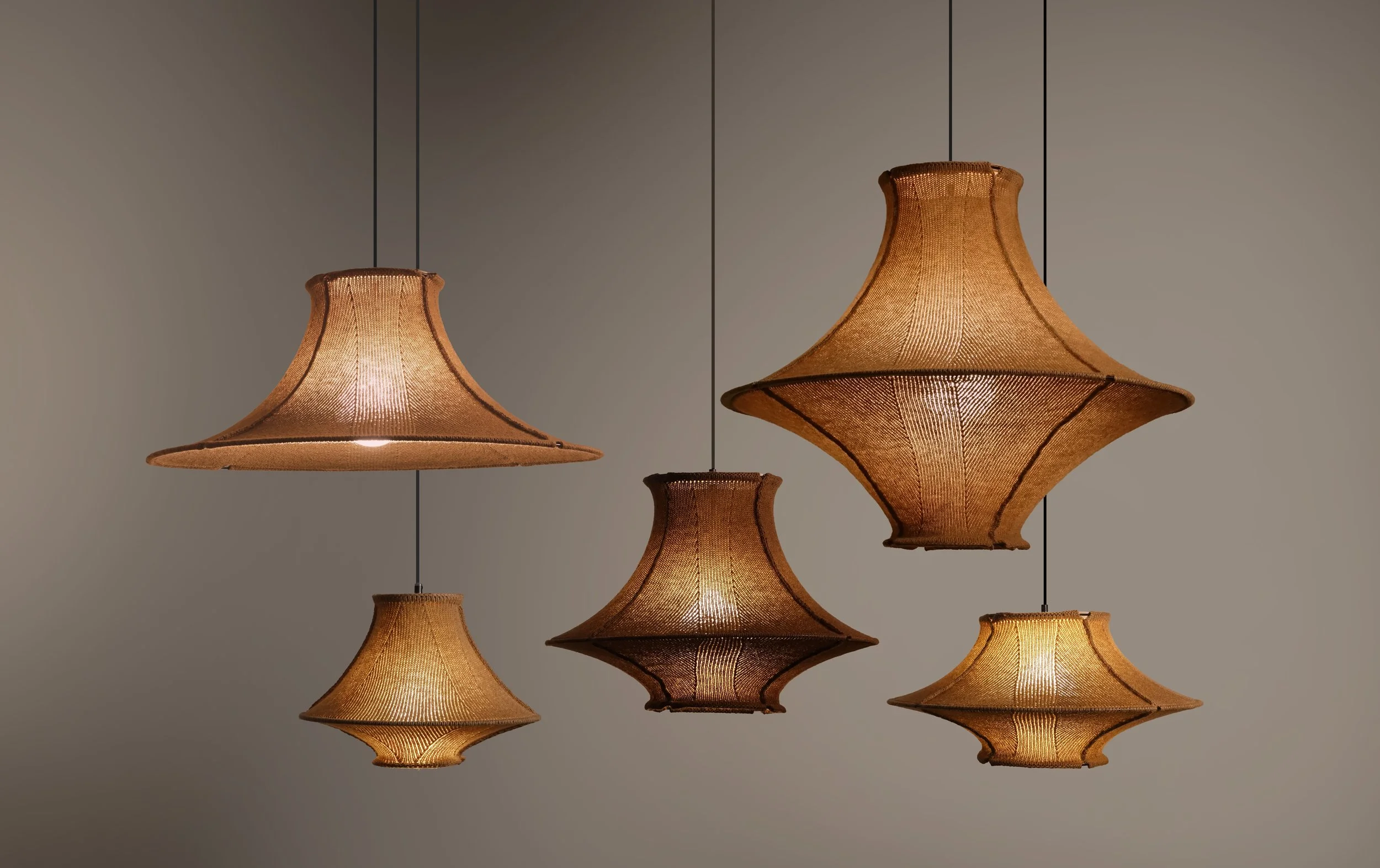
The Hiwa Family in Harakeke Gold.
After much experimentation, we selected the shades that felt the most interesting, and aligned with our brand. Harakeke Gold was one of these colours, an earthy, burnt golden-brown tone, reminiscent of the tussock plains of rural Otago, and perfectly at home in natural, soulful interiors. It was one of our favourite results of this design process, extending our recognisable natural wool palette while giving the range a richer and more expressive colour identity. This product gives architects, designers, and consumers an alternative to globally standardised synthetic colour systems: colour that carries provenance, seasonality, and a direct relationship to whenua, while fitting within a circular product life cycle. The concept challenges the idea that colour needs to be synthetic, standardised or globally interchangeable. Instead, it asks whether colour can be slower, more seasonal and more responsible.
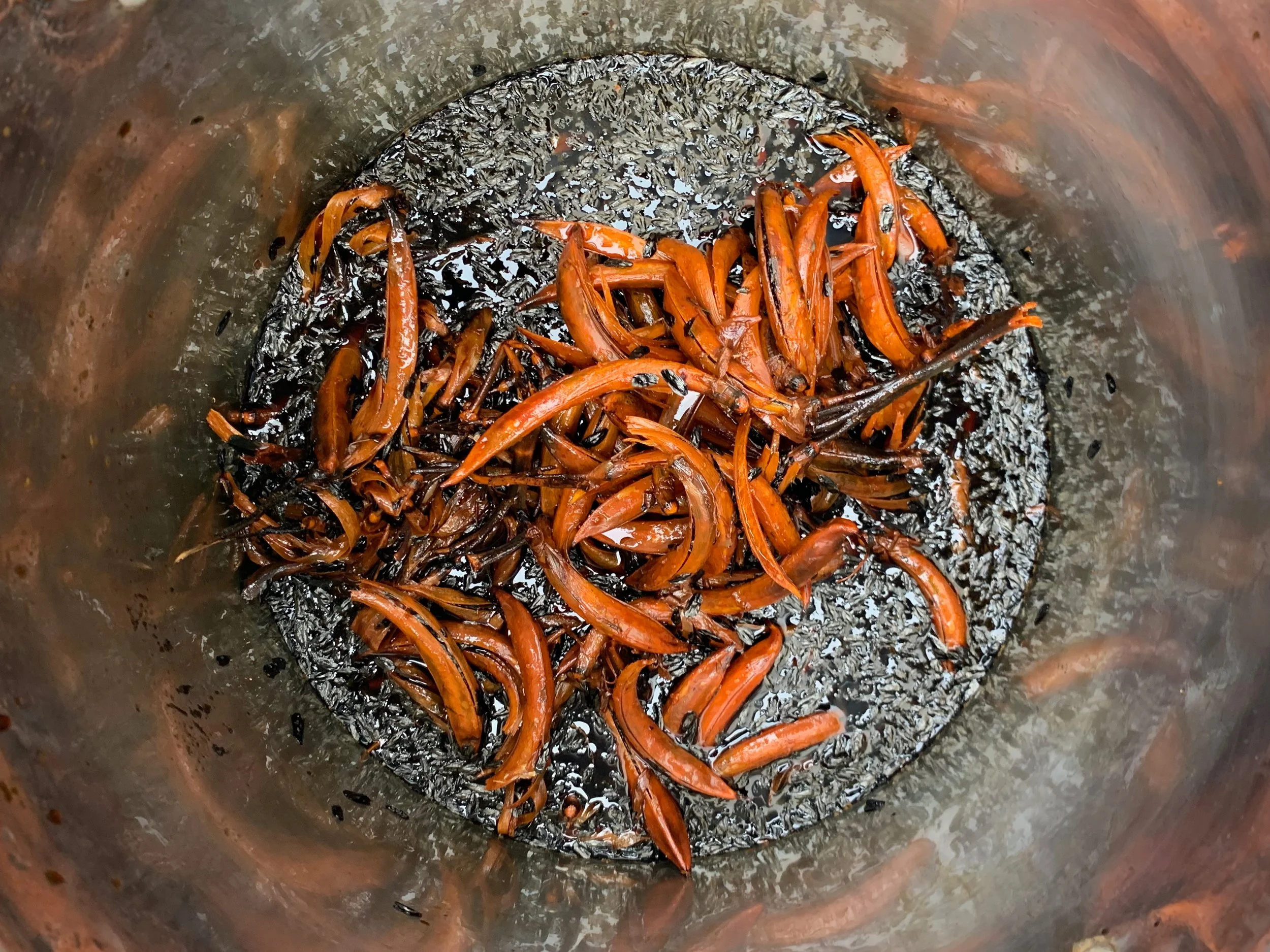
Seed Pods foraged locally.
Developing the colour
Harakeke Gold is a plant-dyed wool colour developed specifically as an additional colour offering for our Hiwa and Bloem lighting products. The design challenge was to introduce colour without compromising the circular and regenerative integrity of the wool or the product's end-of-life. The dye process needed to create a colour that was beautiful and appealing to the consumer, visually consistent enough for production and the end user, achievable in our in-house studio, and responsible enough to align with our compostable material system. The colour is achieved through a small-scale plant-dye process using locally sourced harakeke and other organic matter. Through testing, we refined the fibre preparation, dye strength, temperature, timing and repeatability to create a shade that feels considered and is repeatable, while still allowing the subtle variation of plant dye to remain part of its character. Subtle variations in tone, the nature of batch piece-dyeing, remain visible and form part of the character of each piece. The resulting colour sits quietly in a space: a natural shade of burnt golden-brown that works with the knitted wool structure, enhancing the texture of the light when illuminated, while remaining a colour in its own right during the daytime.
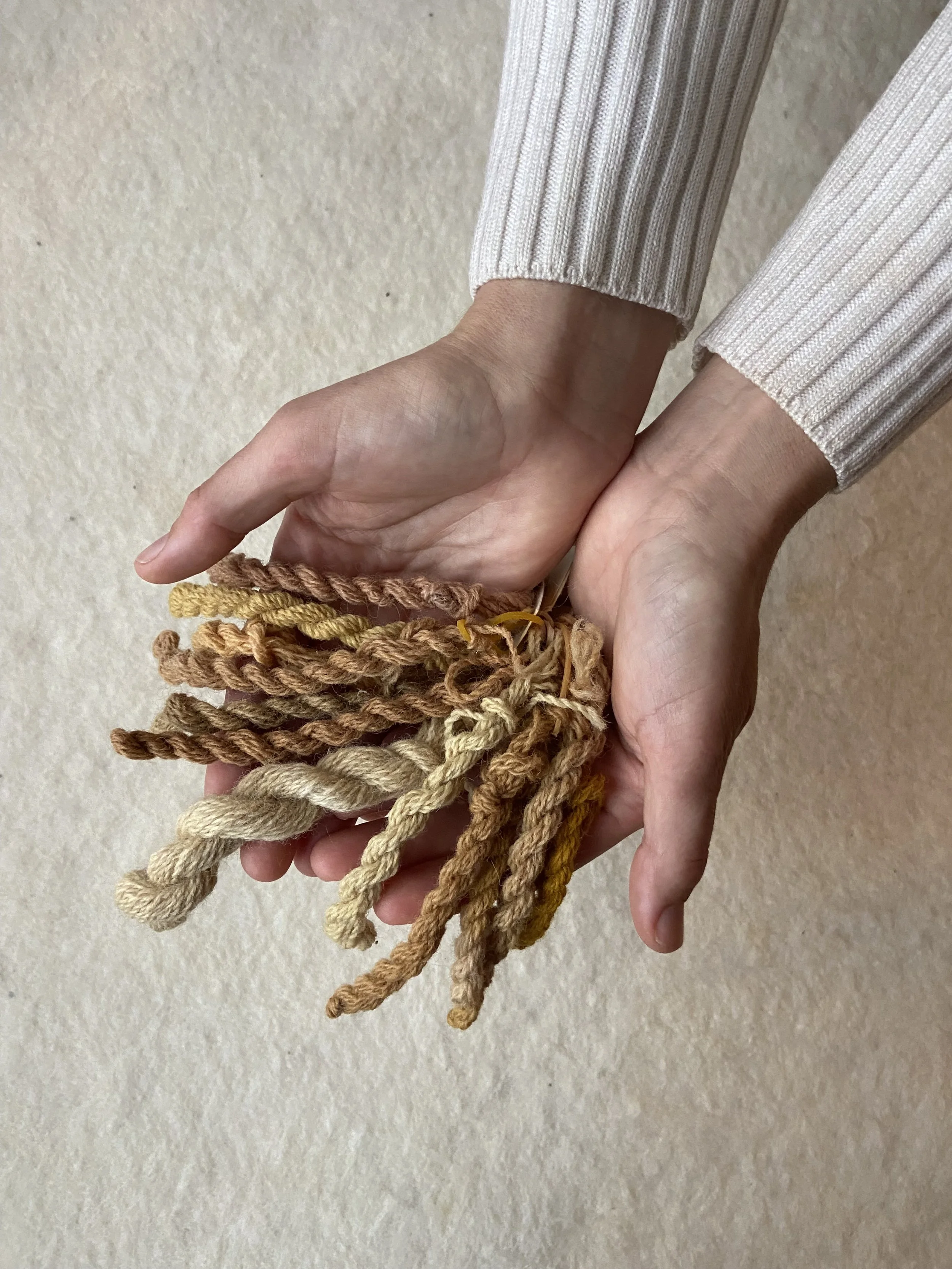
Yarn experimentations.
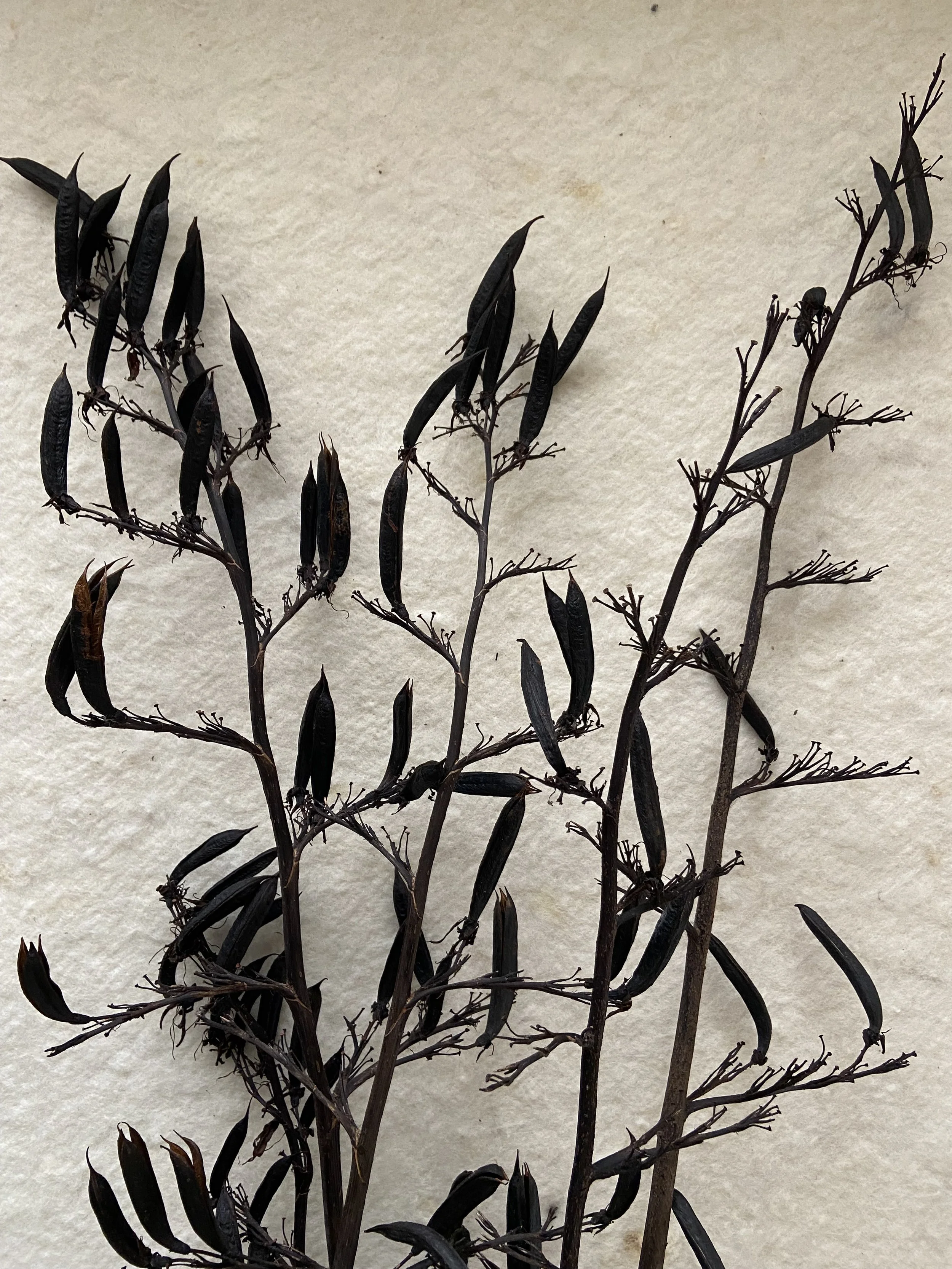
The dried pods.
What it means
What elevates the work is that colour is not treated as a purely visual element, but as part of a circular product life cycle where there is also provenance. Harakeke Gold creates a deeper relationship between our products and place, and supports a more responsible end of life. For the user, it brings warmth, richness of colour, and atmosphere into the home, blending naturally with interiors of wood, wool, and ceramics. It offers a colour with provenance: one that carries a meaningful connection to Aotearoa, rather than drawing from a standardised global palette. The project challenges the assumption that colour must come at the expense of circularity. By working with wool and plant-based dye, the product is designed to return safely to the soil at end of life. The work reflects a more local and respectful way of making. It uses what grows around us, responds to seasonality, and acknowledges harakeke as more than a source of colour: a plant with deep significance in Aotearoa, especially within Māori weaving traditions. It values native plants as part of a living material story. The Harakeke Gold colour range supports a more circular future for New Zealand design by building on what Aotearoa grows, showing how a different approach to colour can transform fibres and plants into products with provenance and meaning.
The Hiwa 60L in Harakeke Gold.
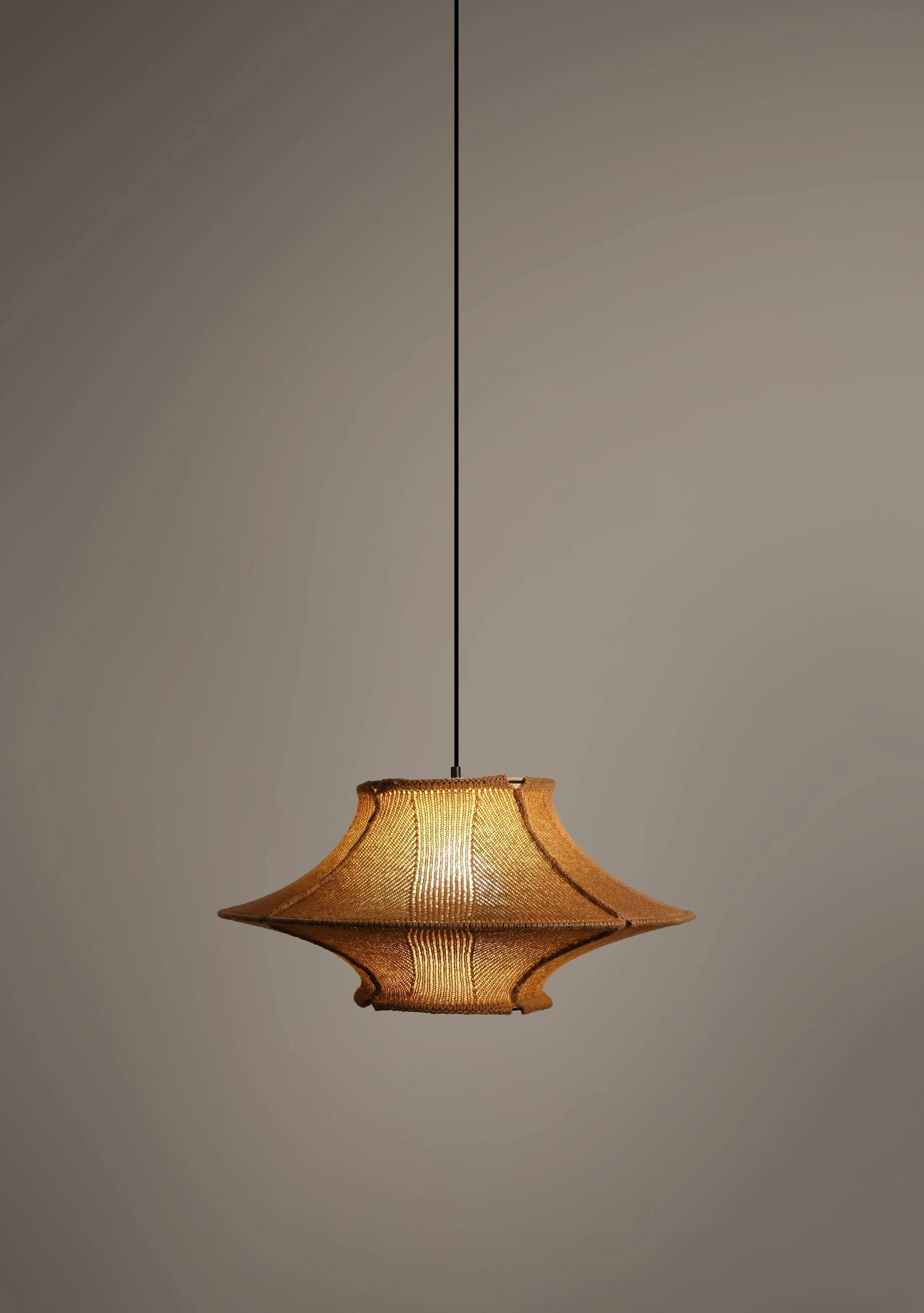
A soft statement in knitted form, colour, and light.
Harakeke Gold is a rich, earthy brown with warm gold undertones, reminiscent of the tussock landscapes of rural Otago and a golden sunset glow. Dyed in our island studio, using foraged plants, seasonally and locally on Waiheke Island. Unlike conventional synthetic dye, Harakeke Gold keeps the wool fully biodegradable at end of life. It's colour with provenance, foraged and dyed locally, connected to Aotearoa rather than a standardised global palette.
This Harakeke Gold shade #14 is a rich golden mid-brown. Each piece is dyed using our small-scale plant-dye process with locally sourced harakeke, so subtle variations in tone are natural and part of its character. No two pieces are exactly alike. Dyed wool fades in harsh UV light. Due to the naturally coloured nature of this product, there will be fading where the product is exposed to light. We regard this as a natural colour evolution of this product.
The Hiwa 60 brings a contemporary take on the classic mid-century feature pendant. Designed as a centrepiece for both larger spaces and lower ceilings, it offers a more compact expression of the HIWA form, with broad proportions and a balanced silhouette. Our woollen lights work beautifully in warm, textural interiors, from modern coastal homes to alpine retreats.
Ideal as a main light in dining settings, bedrooms, and living rooms, or grouped in clusters. The concealed bulb softens glare while the knitted wool gently diffuses light, filling the room with a warm, inviting glow.
Part of the HIWA lighting whānau, a design study exploring how far New Zealand strong wool can be pushed as a lighting material. Crafted in Harakeke Gold, our plant-dyed colourway. Designed and dyed by hand on Waiheke Island, made in Aotearoa New Zealand.
Dimensions – 600mm Ø × 330mm high
Weight – Approx. 1kg
Materials – Plant Dyed 100% New Zealand wool, FSC-certified birch plywood, electroplated steel
Installation – Arrives pre-assembled. Includes black lacquered steel ceiling rose, E27 lamp holder, and 2m black cloth-covered cable. Installation by a registered electrician required.
Recommended bulb – E27 LED, 8W warm white
Shipping – Shipping within Auckland is $25 NZD per order, and $45 NZD per order for the rest of New Zealand, with tracked delivery usually taking 1–3 working days from dispatch. Shipping to Australia is $109 NZD per order, with tracked delivery via NZ Post and Australia Post usually taking 5–7 working days from dispatch. In-stock orders are usually dispatched within 2–3 working days.
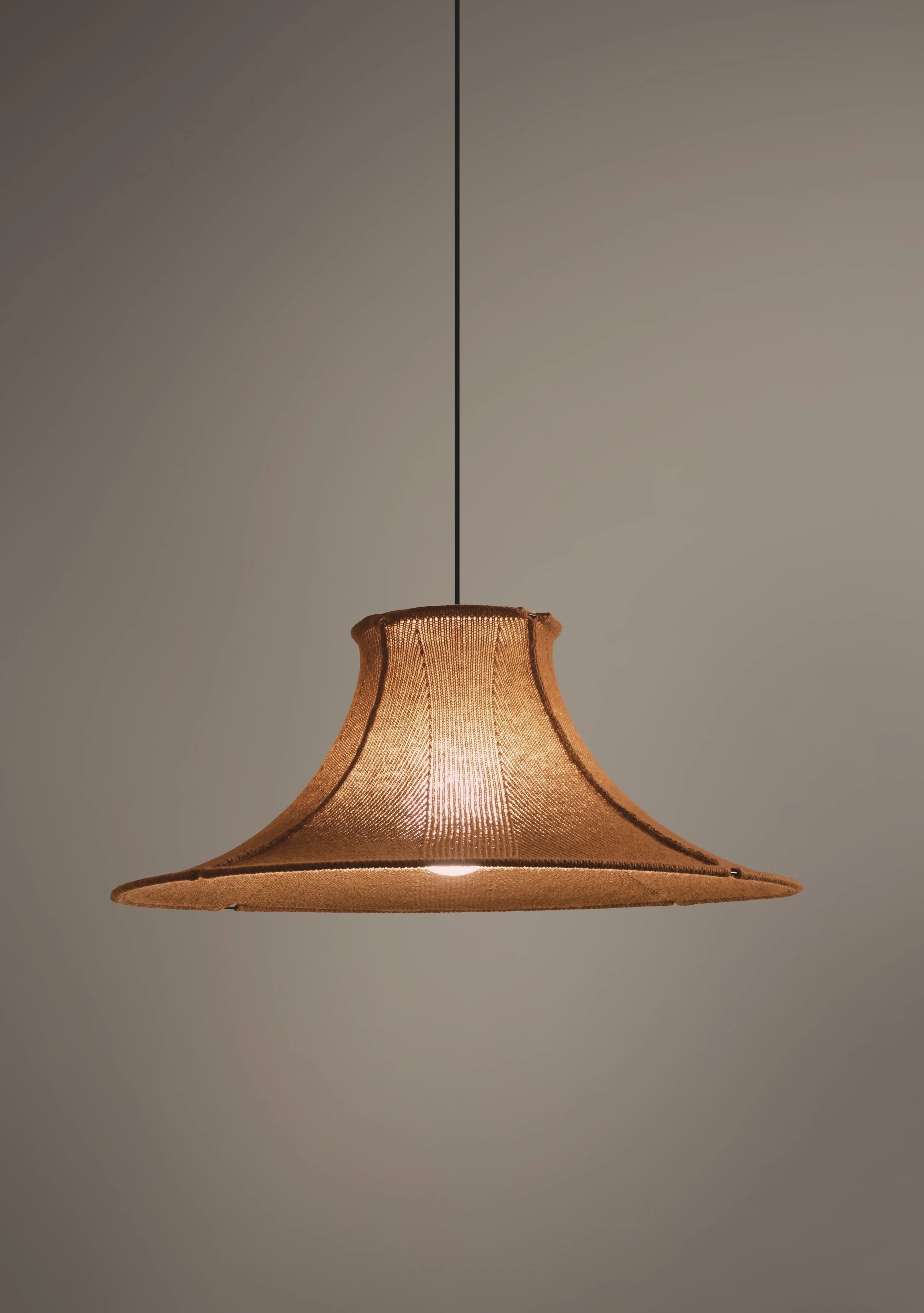
A dramatic statement in knitted form, colour, and light.
The Harakeke Gold collection is made up of rich, earthy browns with warm gold undertones, reminiscent of the tussock landscapes of rural Otago and a golden sunset glow. Dyed in our island studio, using foraged plants, seasonally and locally on Waiheke Island. Unlike conventional synthetic dye, Harakeke Gold keeps the wool fully biodegradable at end of life. It's colour with provenance, foraged and dyed locally, connected to Aotearoa rather than a standardised global palette.
This Harakeke Gold shade #16 is a rich golden mid-brown. Each piece is dyed using our small-scale plant-dye process with locally sourced harakeke, so subtle variations in tone are natural and part of its character. No two pieces are exactly alike. Dyed wool fades in harsh UV light. Due to the naturally coloured nature of this product, there will be fading where the product is exposed to light. We regard this as a natural colour evolution of this product.
The Bloem 80 reimagines the classic cone pendant through the softness and structure of knitted wool. Designed for expansive dining situations that call for a focal point, the Bloem 80 fills a space with volume and light without blocking the view across the table. Its open, flared structure creates a generous silhouette that feels both dramatic and airy. Our woollen lights work beautifully in warm, textural interiors, from modern coastal homes to alpine retreats. Ideal as a single feature over large dining tables, where its scale brings a warm, sculptural presence, gently softening sound and allowing conversations to unfold.
Part of the BLOEM lighting whānau, a design study exploring how far New Zealand strong wool can be pushed as a lighting material. Crafted in Harakeke Gold, our plant-dyed colourway. Designed and dyed by hand on Waiheke Island, made in Aotearoa New Zealand.
Dimensions – 800mm Ø × 350mm high
Weight – Approx. 1kg
Materials – Plant Dyed 100% New Zealand wool, FSC-certified birch plywood, electroplated steel
Installation – Arrives pre-assembled. Includes black lacquered steel ceiling rose, E27 lamp holder, and 2m black cloth-covered cable. Installation by a registered electrician required.
Recommended bulb – E27 LED, 8W warm white
Shipping – Shipping this oversized item within Auckland is $25 NZD per order, and $115 NZD per order for the rest of New Zealand, with tracked delivery usually taking 1–3 working days from dispatch. Shipping to Australia is $218 NZD per order, with tracked delivery via NZ Post and Australia Post usually taking 5–7 working days from dispatch. In-stock orders are usually dispatched within 2–3 working days.